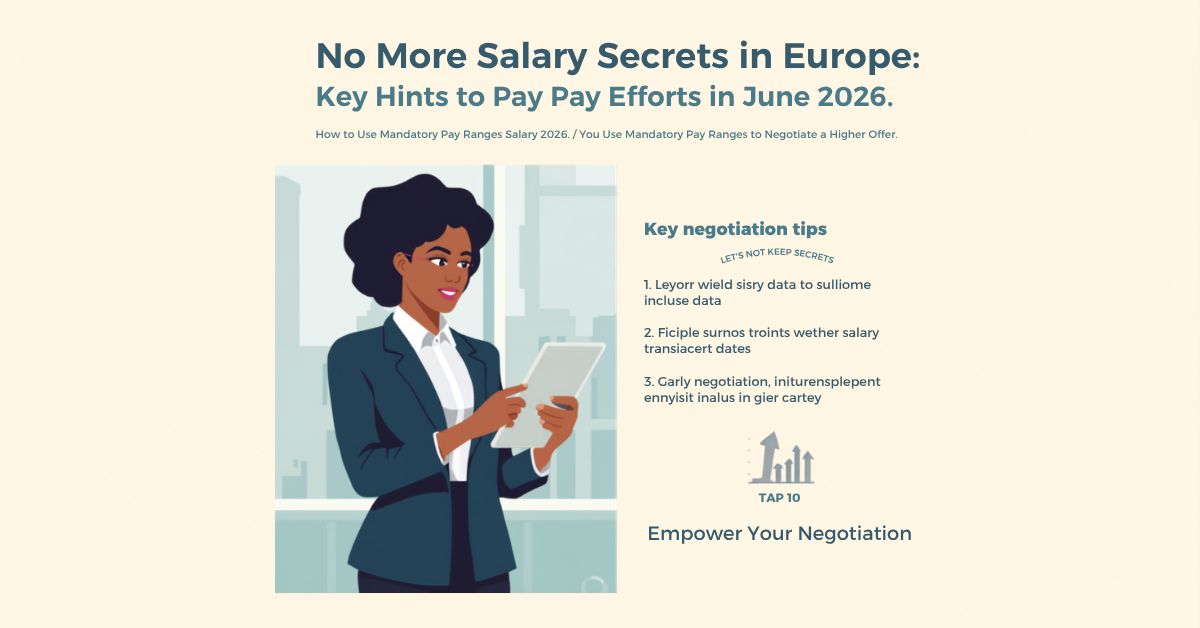
The salary you negotiate today compounds throughout your career. Only 39% of workers negotiated their last offer, yet those who do earn an average of $5,000-$10,000 more. Master these strategies to get paid what you're worth in 2026.
Why Negotiation Matters
Research Your Market Value
Knowledge is power. Before any negotiation, understand what your skills are worth in the current market.
📊 Salary Databases
Use Glassdoor, Levels.fyi, PayScale, and LinkedIn Salary Insights to find ranges for your role, location, and experience level.
🗣️ Industry Contacts
Network with peers in similar roles. Ask about compensation ranges (not specific salaries) to validate your research.
📋 Job Postings
Many states now require salary ranges on job postings. Collect data from similar positions in your area.
🎯 Recruiters
Recruiters know market rates. Even if not job searching, take calls to learn current compensation benchmarks.
The Negotiation Framework
Know Your Number
Define your target salary, acceptable minimum, and walk-away point before entering negotiations.
Let Them Go First
If asked for expectations early, deflect: "I'd like to learn more about the role before discussing compensation."
Anchor High
When you do share a number, start at the top of your range. This sets the anchor for negotiation.
Use Silence
After they make an offer, pause. Silence creates pressure and often leads to improved offers.
Get It in Writing
Once agreed, request written confirmation before accepting. Verbal offers can change.
What to Say: Scripts That Work
Responding to an Offer
"Thank you for the offer. I'm excited about this opportunity. Based on my research and the value I'll bring, I was expecting something closer to $X. Is there flexibility in the base salary?"
Countering a Low Offer
"I appreciate the offer. Given my [specific experience/skills] and the market rate for this role, I'm looking for $X. Can we work together to close that gap?"
When They Can't Move on Salary
"I understand the salary is firm. Could we explore other options like signing bonus, additional PTO, remote flexibility, or an earlier review cycle?"
Beyond Base Salary
Total compensation includes much more than salary. Negotiate the full package:
Signing Bonus
One-time payment to offset salary gap or compensate for lost unvested equity.
Equity/Stock
Stock options, RSUs, or profit sharing can significantly boost total comp.
PTO/Flexibility
Additional vacation days or remote work flexibility have real value.
Development
Education budget, conferences, certifications—invest in your growth.
Review Timing
Negotiate 6-month review instead of annual for faster salary increases.
Title
A better title impacts future earnings and opportunities.
Common Mistakes to Avoid
Accepting too quickly: Always take 24-48 hours to review any offer, even if you plan to accept.
Revealing current salary: Your current pay is irrelevant to your market value. Focus on the role's worth.
Negotiating against yourself: Make one ask, then wait for their response. Don't lower your number unprompted.
Being apologetic: Negotiation is expected. Approach it professionally and confidently.
Negotiation for Different Situations
🆕 New Job
Your strongest leverage. Research thoroughly, negotiate before accepting.
📊 Promotion
Document achievements. Present the case before the promotion is offered, not after.
🔄 Annual Review
Start the conversation 2-3 months early. Track accomplishments year-round.
💼 Counteroffer
Be cautious. Many who accept counteroffers leave within 18 months anyway.