A resume that could be sent to any employer may not make it easy for a particular employer to see why you fit their role. Yet tailoring does not mean copying a job description, squeezing in every phrase or rewriting your work history from scratch. It means choosing truthful, relevant evidence and presenting it in language the reader can recognise.
That matters whether a resume is first reviewed by a recruiter, an applicant tracking system (ATS), or both. Screening tools differ, and no wording can guarantee an interview. But clear formatting and a close, honest match between your experience and the vacancy can make your application easier to assess.
This guide explains how to tailor your resume to a job description without keyword stuffing: what to look for, what to edit, and how to check that the result still sounds like you.
Start by understanding what the role needs
Before editing, read the job description from beginning to end. Do not treat every bullet as equally important. Look for the capabilities and outcomes that appear central to doing the work, as well as any stated qualifications or practical requirements.
Make a short list of what you find. You might sort it into three groups:
- Core responsibilities: the work the successful applicant will regularly do.
- Essential requirements: skills, experience, qualifications or permissions the employer says are necessary.
- Useful extras: desirable tools or experience that could strengthen an application but may not be essential.
Notice repetition and emphasis. If the description mentions reporting in several places, it may be a meaningful part of the job. Also pay attention to the level of responsibility: “supported a team” and “led a team” are not interchangeable.
Then ask yourself whether the role is a sensible match. Tailoring helps explain relevant experience; it cannot replace a required licence, qualification or skill you do not have.
Build a clear match between requirements and evidence
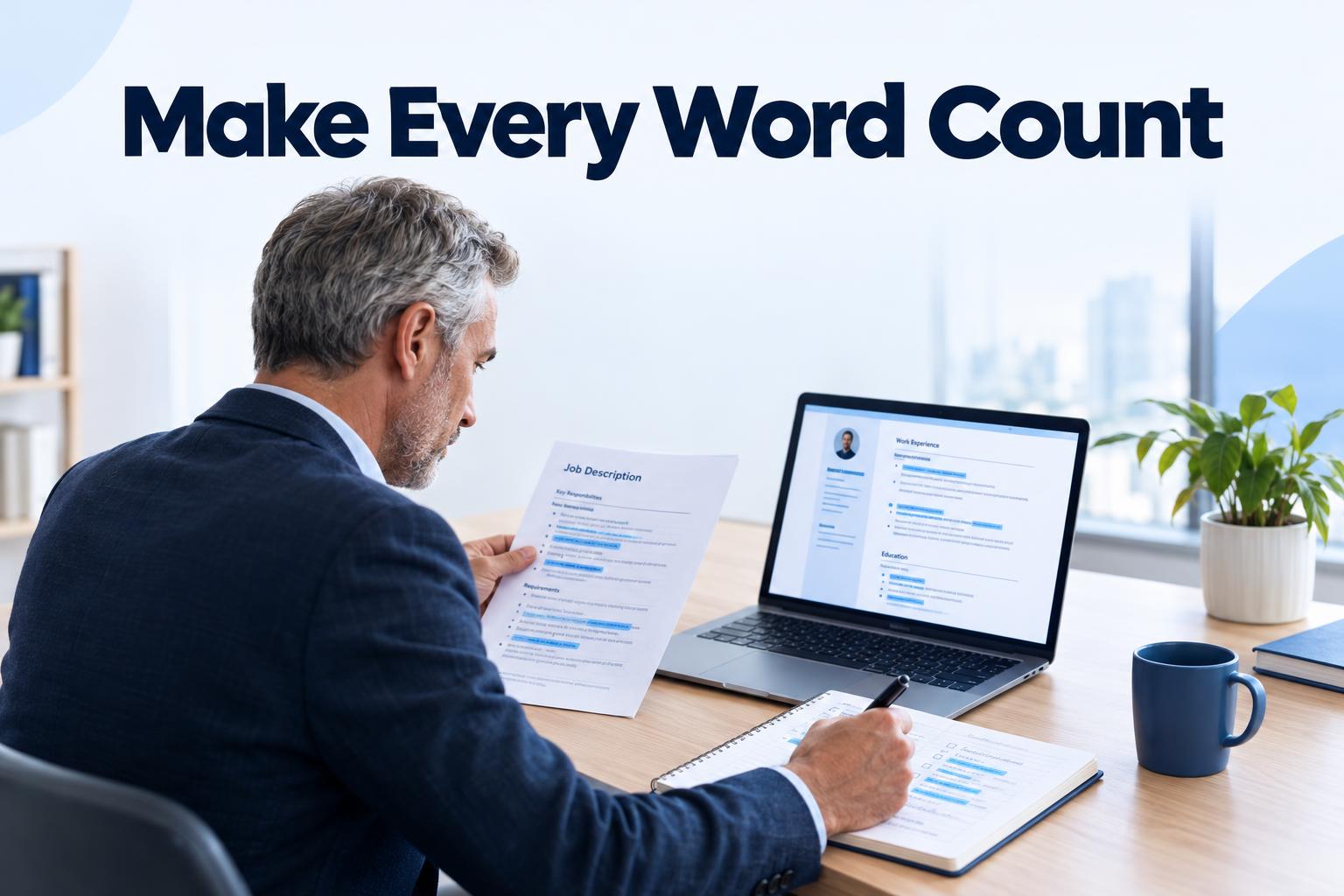
For each important requirement, identify a real example from your work, study, volunteering or a relevant project. Note what you did, the approach or tools you used, and the outcome. The outcome does not have to be a dramatic achievement: delivering work accurately, improving a process or helping a team meet a deadline may be useful evidence.
A simple planning table can stop you from relying on guesswork:
- Job requirement: What does the employer need?
- Your evidence: When have you done something similar?
- Resume location: Where will the reader find that example?
- Gap or limit: Is there anything you should describe carefully rather than overclaim?
For example, if a role asks for “stakeholder communication”, your evidence might be coordinating updates between a project team and clients. If you have not held that exact responsibility, look for a genuinely comparable example rather than claiming experience you do not have.
This exercise is the practical heart of how to match your resume to a job description. It connects the employer’s needs to your evidence before you start polishing phrases.
Choose resume keywords from the job description
Keywords are words or phrases that identify relevant skills, methods, tools, qualifications or areas of knowledge. You can find resume keywords from a job description by noting terms that are specific to the work, rather than collecting every noun in the advert.
Prioritise terms that describe:
- Essential skills, such as budgeting, customer support or data analysis.
- Tools or systems you have actually used.
- Relevant qualifications, licences or industry knowledge.
- Responsibilities and methods that reflect your experience.
Use the employer’s wording when it accurately describes what you did. If the advert says “project coordination” and that phrase fits your work, it can be clearer than an unusual alternative. Where you have used a different but equivalent term, you can explain the connection in a bullet point instead of listing both terms repeatedly.
Do not add a skill merely because it appears in the advert. If you have some exposure but not independent experience, describe that level precisely. For example, say you “assisted with monthly reporting” rather than implying that you owned the reporting process.
Tailor the sections that matter most
You can usually tailor your resume for each job application by making focused edits instead of rebuilding the document. Give particular attention to these areas:
Professional summary
If your resume has a summary, use it to establish your relevant background and the kind of contribution you can make. Keep it specific to the role. Replace a broad statement such as “hard-working professional seeking a new opportunity” with a concise description of relevant experience, strengths and sector knowledge. Do not use the summary to claim expertise your work history cannot support.
Skills section
Put the most relevant, substantiated skills where they are easy to find. Group related abilities if that improves readability, but avoid a long block of disconnected terms. A skills list should complement evidence in your work history, not stand in for it.
Work experience
Reorder or refine bullets so the most relevant responsibilities and results are prominent. You do not have to include every task from every role. Keep details that help explain your fit, and shorten older or less relevant material where appropriate.
Use clear action verbs and name the work involved. When you can support it, add a specific outcome or scope. If exact figures are unavailable or confidential, describe the result in plain language rather than inventing a number.
Education and additional sections
Bring a relevant qualification, course, portfolio or project into view if it helps answer a requirement. Include certifications only when they are current and accurately represented. You can also remove sections that distract from the application, provided you are not leaving out information the employer specifically requests.
Make ATS resume tailoring readable
ATS resume tailoring is not about trying to trick a system. An ATS may help an employer collect, organise or search applications, but systems and hiring processes vary. A readable resume benefits both software and people reviewing it.
Use a straightforward layout with standard section headings such as “Work Experience”, “Education” and “Skills”. Keep important details in the main body rather than relying on decorative graphics, unusual text boxes or information placed only in headers and footers. Use consistent dates and simple bullet points, and check that your contact information is easy to find.
Follow the employer’s requested file format. If no format is specified, a text-based document or PDF with selectable text is generally more practical than a scanned image. After saving, open the file and check that the content still reads in the right order.
A tool such as Clever CV’s ATS checker can help you review formatting and identify possible areas to improve. Treat any automated feedback as a prompt to inspect your resume, not as a promise of passing a particular employer’s screening process.
Avoid keyword stuffing and other common mistakes
Keyword stuffing means repeating terms unnaturally or adding them without evidence. It can make a resume difficult to read and may leave a recruiter unsure what you can actually do. Instead of repeating “customer service” several times, show the kind of service you provided and the problems you handled.
Other mistakes to watch for include:
- Copying whole lines from the advert: translate requirements into your own accurate examples.
- Adding hidden or irrelevant terms: keep all resume content useful and visible to a person.
- Inflating your level: distinguish between exposure, support, independent work and leadership.
- Changing your job title: use your actual title; clarify the function in a description if needed.
- Over-editing: do not remove useful context just to make the resume resemble the vacancy.
If a keyword feels awkward in a sentence, it may not belong there. A natural description of your work is more useful than a list designed only to echo the advert.
Check your tailored resume before sending it
Set aside a few minutes for a final review. Read the job description again and confirm that the strongest requirements you genuinely meet are easy to find. Check that each important skill is supported by a qualification, example or clear description somewhere in your resume.
- Check relevance: Does the opening section quickly explain why your background fits this role?
- Check accuracy: Could you comfortably explain every claim in an interview?
- Check language: Are the employer’s relevant terms present where they naturally fit?
- Check structure: Are headings, dates and bullets consistent and easy to scan?
- Check the file: Does the saved document open correctly and follow the application instructions?
A resume scoring tool can provide another perspective on clarity and completeness, while a grammar checker can help catch typing and punctuation errors. Review suggestions yourself: automated checks can miss context or recommend wording that does not sound like you.
Make tailoring manageable
Keep a complete master resume with your roles, projects, skills and achievements, then make a separate copy for each application. This makes resume customization quicker while reducing the risk of losing useful information. Name each version clearly so you can match it to the correct vacancy.
If the vacancy also asks for a cover letter, use it to explain a relevant motivation or connection that the resume cannot show on its own. A cover letter tool can help you organise that message. For additional career support, you can explore Clever CV’s resume builder or browse job listings.
The best resume customization tips are simple: focus on the employer’s real needs, choose evidence before keywords, and edit only where the change improves clarity or relevance. A tailored resume should make your genuine experience easier to recognise, not make you look like someone else.