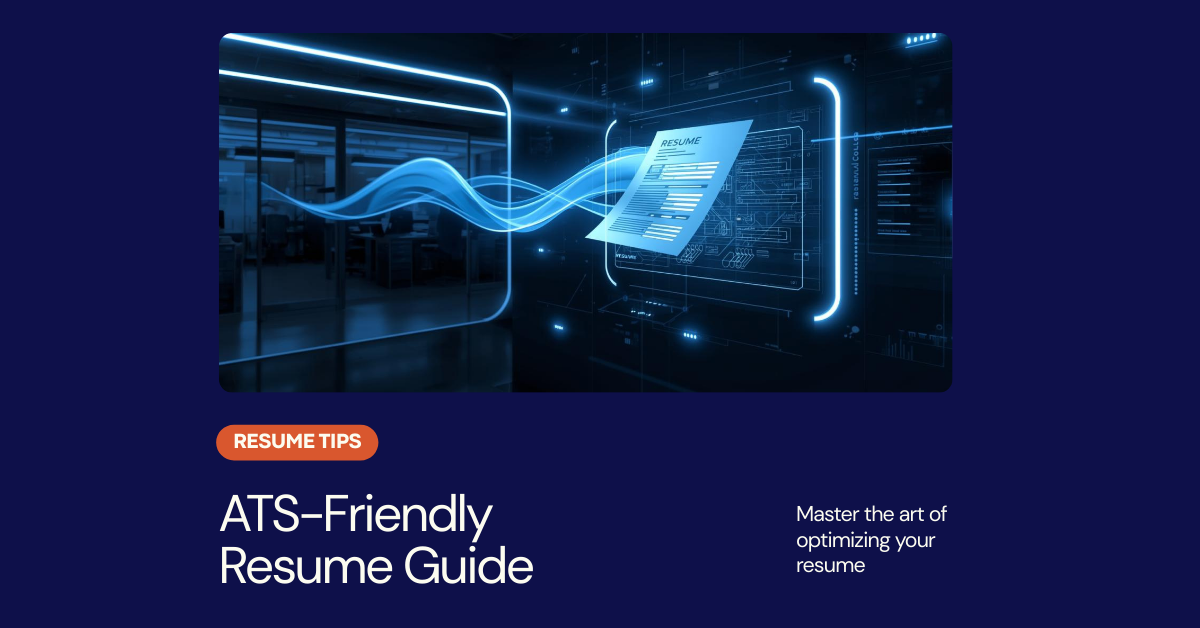
If you have been applying for jobs online, your resume has likely been scanned by an Applicant Tracking System (ATS) before any human ever saw it. Understanding how these systems work is crucial for modern job seekers.
What is an Applicant Tracking System?
An ATS is software that helps employers manage their recruitment process. It scans, sorts, and ranks resumes based on keywords, skills, and qualifications. According to recent studies, over 98% of Fortune 500 companies use some form of ATS.
How Does an ATS Work?
When you submit your resume online, the ATS:
- Parses your resume - Extracts text and organizes it into categories
- Searches for keywords - Matches your content against the job description
- Ranks candidates - Scores resumes based on relevance
- Filters applications - Only top-scoring resumes reach recruiters
Why Do Companies Use ATS?
Large companies receive hundreds or thousands of applications per position. An ATS helps them:
- Save time by automating initial screening
- Ensure consistent evaluation criteria
- Maintain compliance with hiring regulations
- Build talent databases for future openings
Common ATS Software
Some popular ATS platforms include:
- Workday
- Taleo (Oracle)
- Greenhouse
- Lever
- iCIMS
- BambooHR
How to Beat the ATS
To ensure your resume passes ATS screening:
- Use standard formatting - Avoid tables, graphics, and unusual fonts
- Include relevant keywords - Mirror language from the job description
- Use standard section headers - Work Experience, Education, Skills
- Submit in the right format - PDF or DOCX as specified
- Avoid headers and footers - ATS may not read content in these areas
Ready to create an ATS-optimized resume? Try Clever CV - our AI-powered resume builder automatically formats your resume for ATS compatibility while keeping it visually appealing for human reviewers.
Key Takeaways
Understanding ATS is no longer optional for job seekers. By formatting your resume correctly and including relevant keywords, you significantly increase your chances of getting past the initial screening and landing an interview.