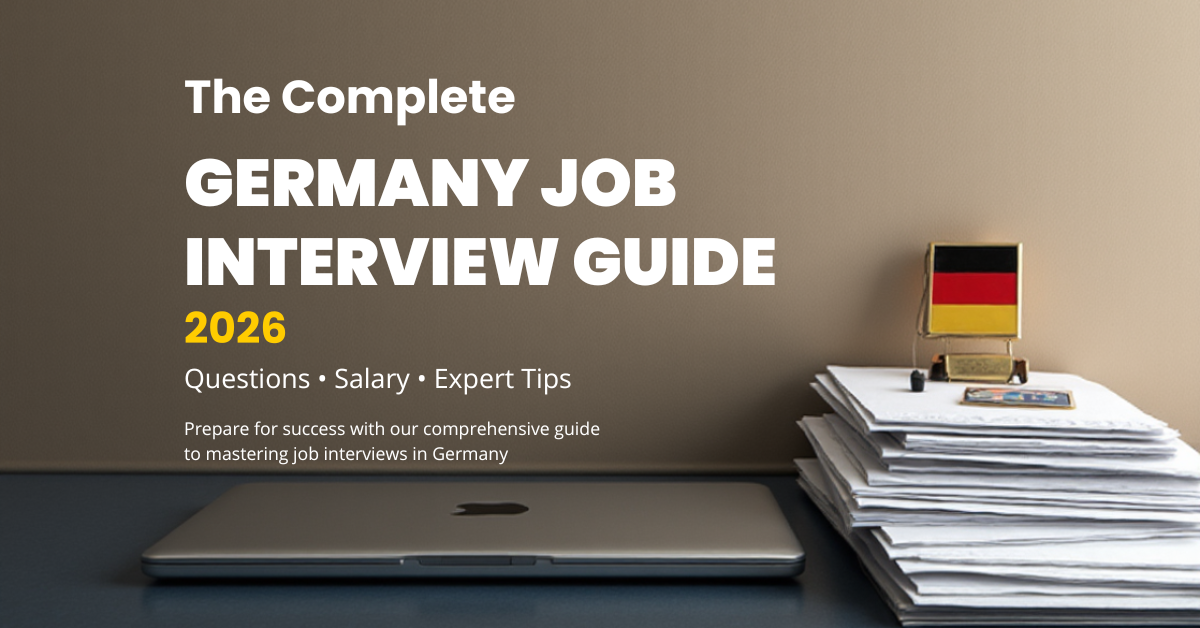
Germany stands as Europe's largest economy and a global leader in engineering, automotive, technology, and manufacturing. With over 1.7 million job vacancies and a highly skilled workforce shortage, 2026 presents exceptional opportunities for job seekers. However, German interview culture is distinctly different from other countries—understanding these nuances is essential for success. This comprehensive guide provides everything international and local candidates need to excel in German job interviews.
The German Job Market in 2026: Current Landscape
Germany's economy continues to demonstrate resilience, with the Federal Employment Agency (Bundesagentur für Arbeit) reporting strong demand across multiple sectors. The country's aging population and skilled worker shortage (Fachkräftemangel) have made Germany increasingly welcoming to international talent.
Key Employment Statistics for 2026
- Total job vacancies: 1.73 million across Germany
- Unemployment rate: 5.2% (historically low)
- Average time to hire: 42 days (longer than EU average)
- Skills shortage sectors: IT, engineering, healthcare, skilled trades (Handwerk)
- International worker increase: 18% more work visas issued vs 2024
- Remote work adoption: 34% of positions offer home office options
- Average interview rounds: 2-3 (often including assessment)
Understanding German Application Culture: The Bewerbung
Essential Application Documents
German employers expect a complete Bewerbungsmappe (application portfolio). Missing documents can immediately disqualify candidates:
- Lebenslauf (CV): Typically includes professional photo, date of birth, and nationality—unlike US/UK CVs
- Anschreiben (Cover Letter): Highly valued; must be tailored to each position
- Arbeitszeugnisse: Reference letters from ALL previous employers (legally required in Germany)
- Zeugnisse: Certified copies of degrees, diplomas, and certificates
- Translations: Official translations of foreign documents (beglaubigte Übersetzung)
The German Lebenslauf (CV) Format
German CVs differ significantly from international formats:
- Photo: Professional headshot is standard (though legally optional since 2006)
- Personal details: Date of birth, nationality, marital status often included
- Structure: Reverse chronological, detailed, typically 2-3 pages
- Education emphasis: German employers value formal qualifications highly
- No gaps: Explain any career breaks; unexplained gaps raise concerns
- Signature and date: Sign and date your CV (traditional expectation)
The German Interview Process: What to Expect
Stage 1: Initial Application Review
German HR departments conduct thorough document reviews:
- Completeness of Bewerbungsmappe is assessed first
- Arbeitszeugnisse are carefully analysed for coded language
- Qualification verification is more rigorous than other countries
- Response time typically 2-4 weeks (patience required)
Stage 2: Telephone Interview (Telefoninterview)
Initial screening calls typically last 20-30 minutes:
- Verification of application details and qualifications
- Assessment of German language proficiency (if required)
- Discussion of salary expectations (Gehaltsvorstellung)
- Clarification of notice period (Kündigungsfrist) and availability
- Basic motivation and cultural fit assessment
Stage 3: First Interview (Vorstellungsgespräch)
German first interviews are typically formal and structured:
- Duration: 60-90 minutes
- Format: Often panel-style with HR and hiring manager
- Structure: Company presentation, candidate questions, detailed CV review
- Assessment focus: Technical competence, qualifications, cultural fit
- Questions style: Direct and detailed; expect thorough competency questions
Stage 4: Second Interview and Assessment
For professional roles, expect additional evaluation:
- Technical assessment: Role-specific tests or case studies
- Assessment Centre: Common for graduate programmes and management roles
- Probearbeit: Trial work day (paid) to assess practical skills
- Team meeting: Introduction to potential colleagues
- Executive interviews: Meeting with department heads or Geschäftsführung
Top 50 Interview Questions Asked by German Employers in 2026
Personal and Motivational Questions
- Erzählen Sie uns etwas über sich. (Tell us about yourself.)
- Warum möchten Sie bei uns arbeiten? (Why do you want to work for us?)
- Was wissen Sie über unser Unternehmen? (What do you know about our company?)
- Wo sehen Sie sich in fünf Jahren? (Where do you see yourself in five years?)
- Warum verlassen Sie Ihren aktuellen Arbeitgeber? (Why are you leaving your current employer?)
- Was sind Ihre Stärken? (What are your strengths?)
- Was sind Ihre Schwächen? (What are your weaknesses?)
- Was motiviert Sie bei der Arbeit? (What motivates you at work?)
- Wie würden Ihre Kollegen Sie beschreiben? (How would your colleagues describe you?)
- Warum sollten wir Sie einstellen? (Why should we hire you?)
Experience and Qualification Questions
- Führen Sie uns durch Ihren Lebenslauf. (Walk us through your CV.)
- Welche relevante Erfahrung bringen Sie mit? (What relevant experience do you bring?)
- Beschreiben Sie Ihr größtes berufliches Projekt. (Describe your biggest professional project.)
- Welche Fachkenntnisse besitzen Sie? (What expertise do you possess?)
- Wie haben Sie sich beruflich weiterentwickelt? (How have you developed professionally?)
- Welche Zertifizierungen haben Sie? (What certifications do you have?)
- Wie halten Sie sich fachlich auf dem Laufenden? (How do you stay current professionally?)
- Was war Ihr größter beruflicher Erfolg? (What was your greatest professional success?)
- Beschreiben Sie eine Herausforderung und wie Sie diese gemeistert haben. (Describe a challenge and how you mastered it.)
- Welche Software/Tools beherrschen Sie? (What software/tools are you proficient in?)
Behavioural and Situational Questions
- Wie gehen Sie mit Stress um? (How do you handle stress?)
- Beschreiben Sie eine Konfliktsituation mit einem Kollegen. (Describe a conflict situation with a colleague.)
- Wie reagieren Sie auf Kritik? (How do you respond to criticism?)
- Erzählen Sie von einem Fehler und was Sie daraus gelernt haben. (Tell us about a mistake and what you learned.)
- Wie organisieren Sie Ihre Arbeit? (How do you organize your work?)
- Beschreiben Sie Ihren Führungsstil. (Describe your leadership style.)
- Wie arbeiten Sie im Team? (How do you work in a team?)
- Wie gehen Sie mit Deadlines um? (How do you handle deadlines?)
- Erzählen Sie von einer Situation, in der Sie Initiative gezeigt haben. (Tell us about a situation where you showed initiative.)
- Wie treffen Sie Entscheidungen? (How do you make decisions?)
Company and Role-Specific Questions
- Was interessiert Sie an dieser Branche? (What interests you about this industry?)
- Wie würden Sie Ihre ersten 90 Tage gestalten? (How would you approach your first 90 days?)
- Welche Erwartungen haben Sie an diese Position? (What expectations do you have for this position?)
- Wie können Sie zu unserem Unternehmenserfolg beitragen? (How can you contribute to our company's success?)
- Kennen Sie unsere Produkte/Dienstleistungen? (Do you know our products/services?)
- Wie sehen Sie die Entwicklung unserer Branche? (How do you see the development of our industry?)
- Was unterscheidet Sie von anderen Bewerbern? (What distinguishes you from other candidates?)
- Welche Fragen haben Sie an uns? (What questions do you have for us?)
- Sind Sie bereit umzuziehen? (Are you willing to relocate?)
- Wie flexibel sind Sie bezüglich Arbeitszeiten? (How flexible are you regarding working hours?)
Practical and Administrative Questions
- Was sind Ihre Gehaltsvorstellungen? (What are your salary expectations?)
- Wann könnten Sie anfangen? (When could you start?)
- Wie lang ist Ihre Kündigungsfrist? (What is your notice period?)
- Sind Sie zu Dienstreisen bereit? (Are you willing to travel for work?)
- Haben Sie eine Arbeitserlaubnis? (Do you have a work permit?)
- Sprechen Sie weitere Sprachen? (Do you speak other languages?)
- Bewerben Sie sich bei anderen Unternehmen? (Are you applying to other companies?)
- Was würde Sie dazu bringen, unser Angebot abzulehnen? (What would make you decline our offer?)
- Haben Sie Referenzen? (Do you have references?)
- Gibt es noch etwas, das Sie uns mitteilen möchten? (Is there anything else you'd like to tell us?)
German Salary Expectations: 2026 Data by Region and Industry
Salary Ranges by Industry (Annual Gross)
💻 Technology/IT
🚗 Automotive
⚙️ Engineering
🏦 Finance/Banking
💊 Pharmaceutical
🏥 Healthcare
📢 Marketing
🏭 Manufacturing
Regional Salary Variations
Salaries in Germany vary significantly by region. Here are adjustments compared to the national average:
- Munich (Bayern): +20-25% above national average (highest cost of living)
- Frankfurt (Hessen): +15-20% above national average (finance hub)
- Stuttgart (Baden-Württemberg): +15-18% above national average (automotive centre)
- Hamburg: +10-15% above national average
- Düsseldorf (NRW): +8-12% above national average
- Cologne (Köln): +5-10% above national average
- Berlin: National average to +5% (tech startup hub, lower than expected)
- Leipzig/Dresden (Sachsen): -10-15% below national average
- East Germany (general): -15-20% below national average
Understanding German Salary Structure
German compensation includes several components:
- Grundgehalt: Base salary (typically quoted annually)
- 13. Monatsgehalt: 13th month salary (common in larger companies)
- Weihnachtsgeld: Christmas bonus (50-100% of monthly salary)
- Urlaubsgeld: Holiday bonus
- Bonus/Prämie: Performance-based bonus (10-30% of base)
- Betriebliche Altersvorsorge: Company pension contributions
- Firmenwagen: Company car (common for senior/sales roles)
German Tax and Net Salary
Important: German gross salaries are significantly reduced by taxes and social contributions:
- Income tax (Einkommensteuer): 14-45% progressive rate
- Solidarity surcharge (Solidaritätszuschlag): 5.5% of income tax (for high earners)
- Church tax (Kirchensteuer): 8-9% if registered with a church
- Health insurance: ~7.3% (employer matches)
- Pension insurance: ~9.3% (employer matches)
- Unemployment insurance: ~1.3% (employer matches)
- Care insurance: ~1.7-2.3%
Example: A €60,000 gross salary typically results in approximately €36,000-€40,000 net, depending on tax class and circumstances.
German Interview Culture: Essential Etiquette
Before the Interview
- Punctuality is paramount: Germans consider lateness extremely disrespectful—arrive 5-10 minutes early
- Dress code: Business formal; conservative and professional appearance
- Research thoroughly: Germans expect detailed company knowledge
- Prepare documents: Bring all application documents in a professional folder
- Know your CV perfectly: Be ready to discuss every detail
During the Interview
- Formal address: Use "Sie" and Herr/Frau + surname unless explicitly invited otherwise
- Firm handshake: Brief, firm handshake with eye contact
- Direct communication: Germans value directness; answer questions clearly and specifically
- No exaggeration: Avoid overselling yourself; Germans prefer factual, modest presentation
- Qualifications focus: Emphasise formal education and certifications
- Structure your answers: Logical, well-organised responses are appreciated
Cultural Differences to Understand
- Directness: Germans communicate directly; this is not rudeness
- Hierarchy: Respect for titles and positions (Herr Doktor, Herr Professor)
- Work-life separation: Clear boundaries between professional and personal life
- Thoroughness: Detailed, comprehensive answers valued over brevity
- Reliability: Keeping commitments is taken very seriously
- Planning: Germans prefer structure and advance planning
Language Considerations
- German preferred: 72% of employers prefer German-speaking candidates
- English acceptable: In international companies, startups, and tech sector
- Language levels: A1-A2 (basic), B1-B2 (professional), C1-C2 (fluent)
- Minimum for most roles: B2 German for professional positions
- Exception: IT and tech often accept English-only speakers
German Employment Law: Essential Rights and Expectations
The Employment Contract (Arbeitsvertrag)
German employment contracts are comprehensive and legally binding:
- Written contract required: Must be provided within one month of starting
- Probationary period (Probezeit): Maximum 6 months; 2 weeks notice during this period
- Notice periods: Minimum 4 weeks; often 3-6 months for professionals
- Working hours: Standard 35-40 hours per week
- Overtime: Regulated strictly; often compensated with time off (Überstundenausgleich)
Employee Rights
- Annual leave: Minimum 20 days (based on 5-day week); many employers offer 28-30 days
- Sick leave: Full pay for 6 weeks; then Krankengeld (70% from health insurance)
- Parental leave: Up to 3 years Elternzeit with job protection
- Termination protection: Strong Kündigungsschutz after 6 months at companies with 10+ employees
- Works council: Betriebsrat representation in companies with 5+ employees
Working in Germany: Visa and Permit Requirements
EU/EEA Citizens
- Free to work without visa or permit
- Must register residence (Anmeldung) within 2 weeks of arrival
- Health insurance registration required
Non-EU Citizens
- Job Seeker Visa: 6 months to search for employment in Germany
- EU Blue Card: For highly qualified workers; minimum salary €58,400 (or €45,552 for shortage occupations)
- Skilled Worker Visa: For qualified professionals with recognised credentials
- Recognition of qualifications: Foreign degrees may need official recognition (Anerkennung)
Post-Interview Protocol in Germany
Following Up
- Thank-you note: Not as expected as in US/UK, but appreciated for senior roles
- Patience required: German hiring processes are thorough; expect 2-4 weeks for response
- One follow-up: Acceptable after their stated timeline has passed
- Written offer: Always request written contract before accepting
Negotiating the Offer
- Negotiation is acceptable but should be factual and reasonable
- Discuss total package: base salary, bonuses, vacation days, home office
- Request time to review the contract thoroughly
- Consider consulting a lawyer for senior positions (common in Germany)
2026 German Hiring Trends
Skills in High Demand
- Digitalisation/IT skills: Across all industries (76% of employers)
- Data analysis and AI: Growing rapidly (68%)
- Sustainability/ESG expertise: Critical for German industry (64%)
- Engineering and technical skills: Persistent shortage (61%)
- Healthcare professionals: Severe shortage continues (58%)
- Skilled trades (Handwerk): Critical shortage of qualified workers
Industry 4.0 and Beyond
- German manufacturing embracing automation and digitalisation
- Demand for workers bridging traditional engineering and digital skills
- E-mobility transition creating new roles in automotive sector
- Renewable energy sector expanding rapidly
Remote Work in Germany
- 34% of positions offer home office options (Homeoffice)
- Hybrid models becoming standard in office-based roles
- Legal right to request remote work under discussion
- Tax implications for home office being clarified
Conclusion: Your Path to German Career Success
Success in German job interviews requires thorough preparation, cultural awareness, and authentic presentation of your qualifications. The German job market in 2026 offers exceptional opportunities for candidates who understand the country's unique professional culture—valuing directness, qualifications, reliability, and thoroughness.
Whether you're a recent graduate, an experienced professional, or an international candidate drawn to Europe's strongest economy, mastering the German interview process opens doors to rewarding careers in one of the world's most stable and prosperous job markets.
Remember: Germans respect preparation and professionalism. Invest time in understanding the culture, prepare comprehensive documentation, and approach interviews with confident humility. Your attention to detail and genuine qualifications will be recognised and rewarded.
Ready to create a Lebenslauf that impresses German employers? Our AI-powered CV builder helps you craft the perfect application for the German job market, formatted correctly and optimised for German hiring practices.